Category: Tall Buildings

  • The London Slowdown

    The London Slowdown

    Damned by a Trickle – 26 April 2026

    Over the last couple of years construction of new housing in London has, in the words of John Burn-Murdoch, slowed “to a trickle”. The building spree which has seen clusters of new residential towers sprouting around the city has stopped or, as The Telegraph noted in March 

    …housebuilding has collapsed. Just over 4,100 new homes were started in the capital in 2024-25, down 72pc on 2023-24. Developers have warned that without stronger buyer appetite, London’s new-build pipeline will continue to shrink. 

    Plans for many more towers exist of course but economic conditions are no longer right for backers to execute them. The government hopes with deregulation work will resume. 

    Although its fall from grace seemed final in the 70s, high rise housing has made a big comeback since the early 2000s. Planning permission for hundreds of residential towers in London has been granted in the 21st century. Building homes (and student accommodation) in high rise blocks on big, windfall sites is the signature of a growth coalition between developers and politicians. The aims are 

    • more homes on less land
    • economic growth 
    • foreign direct investment (FDI)

    High rise is a key marker of an investable project for foreign investors. The shape of modern London is linked – some might say “obviously” – to the willingness of foreign investors to buy off plan, and their appetite to do so is strengthened by perceived liquidity of standardised residential high-rise. Jeb Brugmann lamented this commodification in the book “Welcome to the Urban Revolution” (2009)

    …industrial batch production has been taken to its logical conclusion: growing numbers of large and small investors have participated in the commodification of the city, producing, purchasing, and flipping generic units (i.e., square feet) of “city” for speculative purposes

    Selling UK assets to foreign buyers is what Mark Carney called “relying on the kindness of strangers”. Without it, the pound could devalue sharply. Given the UK’s reliance on energy and food imports for example, building towers all over London might be said to keep Londoners warm and fed because it safeguards the buying power of the pound in their pocket. However, Carney was not recommending relying on the practice.

    Postwar high rise had nothing to do with FDI or shoring up the pound. The difference is more than economic. Today’s clumps of residential towers are closely packed contradicting the postwar commitment to using towers to free up the ground as parkland or for low and mid-rise family homes, often including houses, a practice known as “mixed development”. Mixed development is exemplified by anonymous estates built in Camden before Sydney Cook came along with his principled rejection of tall buildings. West Kentish Town, Wendling, Bacton, Denton, plus the better known Barrington Court, are estates in Gospel Oak which feature a single tower block or slab surrounded by low-rise. 

    Although mitigating the trade deficit with capital inflows from foreigners buying up London’s formulaic residential “product” is not an explicit aim of planning policy, it surely affects the regulatory and political environment in which decisions are taken about development. 

    There are complicated issues here that are beyond my powers of analysis. But, there are some things worth saying if only because they beg questions of those with answers. First of all, the complicated construction of high rise residential towers relies a lot on imported goods which lessens the benefit of selling the end product to foreign buyers. In other words, there’s a growing UK trade deficit in construction materials and components. The Stay Club building on Holmes Road in Kentish Town provides accommodation for foreign students (good for the balance-of-payments) but all its 358 lettable student rooms were imported as pre-fabricated, pre-furnished bedroom pods from China. The same company’s 19-storey Colindale complex has nearly 600 pods.

    Secondly, UK cities hawk their “investable projects” to foreign investors all the time. The bizarre Opportunity London website hints at desperation for international capital. Meanwhile, the recent Centripetal Cities report on Manchester’s residential densification shows foreign asset ownership generates revenue which does not make Mancunians richer even as the sale of UK land for development might mitigate the trade deficit.

    Lastly, there is a question about spatial planning and UK industrial policy. Current orthodoxy focuses on “site optimisation” but leads to the failing high rise model. The impasse should be recognised as a function of the complexity of high rise buildings which rely on ever more imported finished products, and our town planning culture which lacks a prescription for sensible urbanisation for our times.

    A shift away from high rise densification with its import-intensity towards a new housing stock based on simplified construction and a different approach to urbanisation is needed. We need a new idea about an appropriate domestic building type for a new wave of urbanisation in our country – a robust formula to fit our budget .

    And before the “compact city” is used to argue for sticking with commoditised residential high rise, we might acknowledge that consumption is the issue, not built form. In other words, the densification of London won’t deliver more sustainable life-styles but guarantees construction becomes more expensive and more difficult. 

    Our town planning is productivist without either an industrial strategy or a plan for sensible and achievable urbanisation.

    [Editor adds: this post by Tom Young starts what we hope will be debates on key issues raised in the Just Space Alternative Plan for London as a caring City. Submit via email or comment below. ]

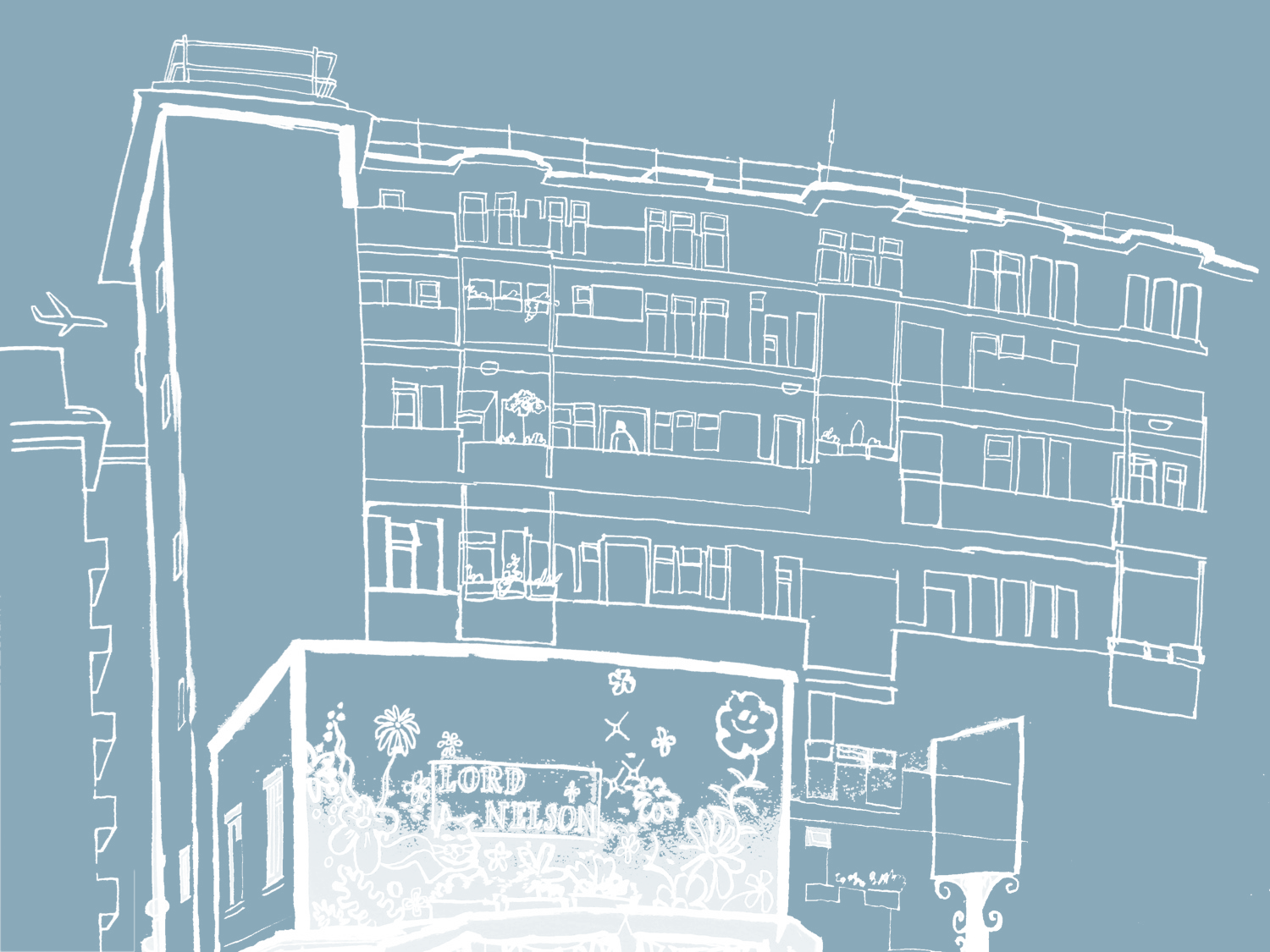
    Left image by Tom Young, right image from a developer’s marketing site.

  • M34-5 Design 5 March

    M34-5 Design 5 March

    Warning: Just Space and UCL are trying to make available some sort of record of what happens in the EiP for the benefit of community members. Notes are being taken by students and checked/edited so far as possible by more experienced staff and others. Neither Just Space nor UCL offers any guarantee of the accuracy of these notes. If you wish to depend on what was said at the EiP you should check with the speaker or with the audio recordings being made by the GLA. If you spot mistakes in these notes please help us to correct them by emailing m.edwards at ucl.ac.uk

    Delivering good design

    Note: Un-rehearsed alliance between Just Space, Footwork architects and NHS.

    GLA:

    • GLA: Policy D1 sets out extensive criteria; focused mainly on physical attributes of design. Physical as well as experience; safe, inclusive —what design leads to in terms of what you experience in environment. Drawing on work of Jan Gehl— how you experience urban environment – how does the human interact with the city. Number of factors that combine to make experience. Physical leads to experience.
    • Defend that policy is London-shaping.


    London Tenants Federation

    • Question/concern in references of ‘character’… it’s not just about design, its about social content, what kind of communities live there, what is their economic status. Has huge impact.
    • Expressed concern of Harlesden residents with huge development coming to Old Oak Park Royal opportunity area. How does this design policy shape or form to protect that kind of existing community?


    London Forum

    • D1/2: These aren’t policies they are process/procedures better dealt with in guidance, however problem with that as they then aren’t scrutinized.
    • Very worried about democratic deficit, lack of openness/transparency and community engagement as negotiated in private between LAs and developers etc – community only get to see the output of this, don’t get to see input.
    • Community want greater transparency and say over future of development
    • In a city for all Londoners, Mayor wants communities to feel comfortable with nature and scale of development…however there is a MISMATCH of mayor’s aspirations with what we have here —which is a technician document!
    • Worried that D1/D2 cut people out process.


    CPRE:

    • Welcome changes made to draft on local distinctiveness and welcome given comments regarding human-centred approach outlined by GLA of Jan Gehl approach..… however they ARE NOT FOLLOWED THROUGH IN D1/D2. There is huge gap between that spirit and way which policy is expressed here.
    • Particular concern way in which plan as a whole is silent around NIEGHBOURHOOD planning approaches to resolving tensions. In order to understand local distinctiveness, would Like to see communities encouraged to go down neighbourhood planning route.
    • London is made up from a number of villages… we don’t want London Plan to lead us down road to change/development in London that is uniform, ‘anywhere places’ which leech distinctiveness away from London. This can be overcome by engaging communities more proactively.


    Just Space

    • D1B needs to demonstrate the community engagement process undertaken at appropriate time and how it influences the design.
    • Instead of using social indices of multiple deprivation as a headline, our idea is to have this mechanism of social impact assessmentto find out which of these assets are important to people, which directly relates to what is designed and planned there.


    Footwork architects:

    • Define good design in policy?
    • Agree with Just Space and others that emphasis on this policy informing area planning is important in that it’s an understanding of the social contextof places before a red line appears around a site that then informs quality of development proposals put forward.
    • In the mayor’s introduction, he defines good growth and acknowledges that there is social process to design.
    • Design can’t claim to be good If doesn’t acknowledge local context or people’s needs, wishes and what people value in a place. Then can act on this in how an area can be protected and enhanced.
    • Need to define mechanisms for understanding local character and social context prior to development, need a proper assessment and early intervention and a requirement to act on this information
    • Need to show an understanding of likely social impact of development
    • Promoting inclusivity requires an understanding of existing social makeup and what well-integrated communities are in order to avoid displacement of existing communities and businesses.
    • To avoid formless places? Acknowledge SOCIAL HERITAGE alongside built heritage, reference to local identity as to what makes each place unique.


    HBF:

    • GLA has said LP is a different type of document from local plans and therefore NPPF 2012 doesn’t necessarily apply, which we take issue with! As it has been our understanding throughout that the soundness of LP is assessed against NPPF…
    • GLA shouldn’t get away with ‘cherry picking’s what it gets away with
    • D2 We have an issue with as it is wordy and difficult for applicants to interpret and navigate and comply with. REMOVE D2 as we think design matters are better addressed at local levels


    London NHS

    • What is missing is what contribution design makes to social interactions, well-being and health.
    • no mention of impact on people’s lives and communities’ health and wellbeing in policy design.


    City of London Corporation:

    • Good design is not always about aesthetics
    • It’s how people feel welcomed irrespective of economic position
    • Way designs are translated to public and we welcome concept of 3D virtual reality – to engage Londoners in understanding design proposals


    Inclusion London:

    • D1: need fully funded access panel with people who understand things for large development and local developments – inclusive expertise. Access and inclusion panels and forums to check over development again and again;
    • Need to challenge assumptions and habits. Rethink and revisit
    • Inclusion actions aren’t referenced throughout


    Friends of the Earth

    • Agree with above that D1: missing crucial elements such as environmental sustainability
    • Need to acknowledge that London characteristics is not just about heritage features but of public spaces/squares and green cover.


    GLA response:

    • Feel that exclusion of communities from process/democratic deficit is dealt with in D2. Also view that issue of local distinctiveness and requirement for London boroughs to do something with initial evaluation and use this to inform policy is dealt with in D2.
    • Plan must be read as a whole!


    RESPONSE TO GLA

    • Impact on mental health is major failing!! (NHS London)
    • Need to have further clause specifically relating to engagement and collaboration (footwork architects)
    • The (profit) numbers are going to continually trump everything else (in reference to HBF), and public participation will be seen as block not benefit. We need to put something in plan where we stop just using the numbers. Where is the limit? (Just space)
    • Plan needs direct reference to how community engagement can be useful in process, (CPRE)
    • D1/2 are NOT London specific. We Agree with HBF that these aren’t policies. Tokenistic additions are not going to solve fundamental problem. (London Forum).
    • Concern over capacity of LBs to undertake the work, with lack of resources and skills in place making. Since 2014 mayor undertaken surveys to see what place-shaping capacity they have; results are revealing over 1/3rdlack confidence in place-making skills and large % difficulty in retaining their place-making staff (London Assembly Planning Committee)


    **BREAK**


    NHS:

    • Concerned by the focus on appearance OVER impact and outcome on community using it
    • In reference to analytical tools, which are visual and environmental, we propose including HEALTH IMPACT ASSESSMENT IN THERE.


    London First:

    • Support use of master plan, design code and review where appropriate


    Footwork architects:

    • THERE’S a WIDESPREAD VIEW that retaining the initial design team is important
    • Protection of design integrity is something that has been compromised particularly on major schemes.
    • Design review is important process as it ensures development proposals deliver on their promises. Communities often feel disenfranchised and that their power to influence schemes is limited. Good design review according to guideline can ensure that these social requirements are adhered to or at least respected in process


    Just Space:

    • Local input is important. Going outside borough in this policy, there isn’t place for the local consultation results.
    • Best way this can work: if applicant brings consultation results that have already happened to the design review so people know what the local feeling is.
    • Local consultation comments should be introduced to benefit design review


    London Forum:

    • Securing initial design team involvement could be required
    • “Design code” – needs explanation


    Just Space:

    • Master planning ought to have consultation component in it
    • Do not agree with 150 M policy over there in City of London – far too high – more City of London buildings should come to the mayor


    POLICY D3: INCLUSIVE APPROACH

    GLA:

    • Is it necessary? Principles are embedded in plan to remove barriers to inclusion, it is necessary to ensure that focus continues. Include as many Londoners as possible.


    Design council:

    • Inclusive approach positive
    • Well expressed


    HBF:

    • High standards of inclusive design is vague – applicant wouldn’t know or decision maker know how to respond to that. ‘highest standards’ is too vague.


    Footwork:

    • Inclusive design is defined in such a narrow way!!!
    • Only reference to physical barriers NOT SOCIAL BARRIERS !!!
    • Social accessibility needs to be cleared up


    Just space:

    • Build on/ amplify what Footwork Architects said (without prior collaboration).
    • Create inclusive communities; Age friendly cities/communities.
    • Design for aging population is a life course approach. To support aging population you need social cohesion to avoid inter-generational conflict and to facilitate downward and upward transfer of resources and knowledge between people in different age groups.
    • Needs of young, excluded groups, families – all need to be included.
    • If just talking about physical barriers – when we think about the lifts in A3: those also with cognitive and sensory impairment – who could have issue exiting in emergency
    • Community engagement: resourcing issue. Find it hard to reach groups with valuable voices such as; LGBT, older generation and minority groups. Reaching those has to be done through voluntary organisations who often have the capacity, contacts and knowledge but can’t respond effectively without resources.


    London Forum:

    • Support policy but seek changes
    • British standards institution 2005: define inclusive design with regard to access to services and in design policies there is not enough emphasis on this. There are barriers to access to services as well as points that people want to meet!
    • Proposed that more emphasis on walkable communities and maintenanceof those walkable neighbourhood.


    NHS London:

    • Inclusive design in terms of social aspects addressed
    • As GLA say it’s focused on physical barriers
    • Suggestion: inclusive design statements and the fact that there’s no requirement of master plans and design codes to embed and document inclusive design at policy level
    • reference to British standards by London Forum: they’re broader then physical aspects , also touch on neuro-diverse individuals and their experience. Broader aspect bringing the social is important!!
    • Glossary importance: no mis match between this and policies.


    Friend of the Earth

    • Policy doesn’t fully reflect the internal access of buildings. Often, buildings call themselves accessible but internally have no accessible toilets etc
    • Reference to refurbishment – existing buildings are often hopeless – so many places that doesn’t bother with physical access anymore – how we can make London more accessible in the physical sense? Policy needs to refer to refurbishment as well as new building, especially for shopps and town centre uses – and even where planning permission not required.


    Assembly planning committee:

    • Support need for broader definition in policy, not just access issues.


    GLA:

    • Mis match between inclusive design between glossary and use in policy.
    • D3: DOESN’T touch on social and attitudes to design.
    • DESIGN FOR THE MIND********* should COVER PEOPLE NEuRO-DIVERSE CONDITIONS
    • Moved on from lifetime neighbourhoods to inclusive neighbourhoods

    notes from Gabi Abadi

    Back to EiP narrative page