
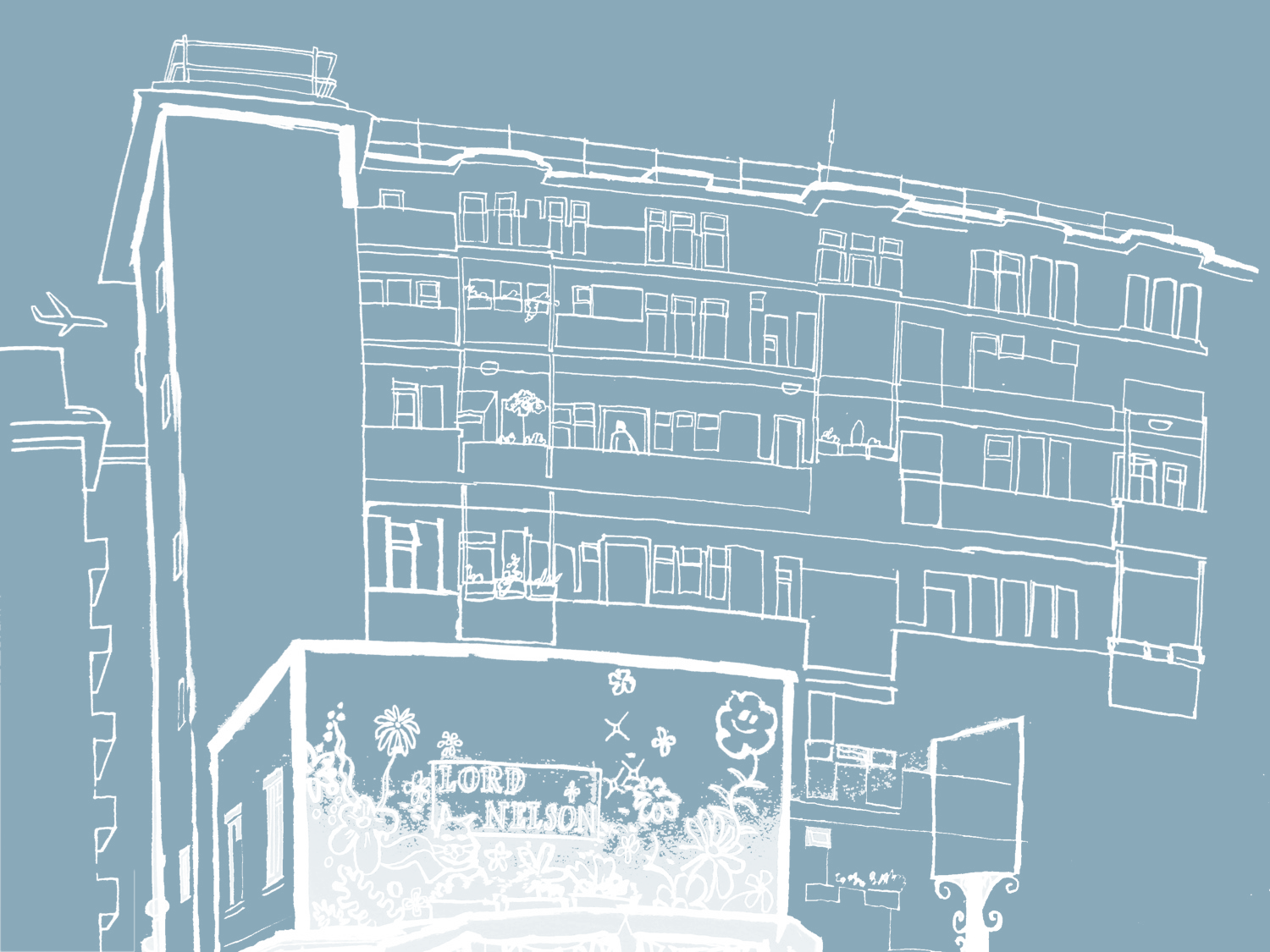
Submission by Pat Turnbull to Hackney Council consultation – urgent
The Consultation Masterplan from Berkeley Homes for Woodberry Down Phases 5 to 8 is under consultation till 5 December 2023 with a view to an ‘outline planning application’ being submitted in Spring 2024. [Editor: there are various dates mentioned as closing dates and it is always worth sending comments even after the formal close. Go to https://hackney.gov.uk/woodberry-down/ Email planning@hackney.gov.uk ]
The document is drawn up in a misleading way. Many pages are devoted to landscaping, infrastructure etc and only right at the end do we come to the crux of the matter – the housing. In consultations people quoted in the document have asked for more desperately needed affordable housing – I’m sure what they really meant was social rented housing, the only kind that is actually affordable to most Londoners, especially those in greatest need. But that’s not what we are getting.
Several times the regeneration is referred to as lasting twenty years. Nevertheless as the document says itself ‘The regeneration of Woodberry Down was first planned in the 1990s’. That means it has been going on in one form or another for over twenty years already and we are only on Phase 3 of 8. This has built a terrible uncertainty into the lives of everyone living on Woodberry Down. It is already 18 years since plans were approved in 2005, to then be altered in 2014. Building work began in 2009. So for much of this time residents have been living on a building site, with all the noise, vibrations, dust and mess connected with it.
The regeneration has had other effects. A Freedom of Information request submitted by Vice News revealed that in 2002, there were 1,722 homes occupied at social rent on the Woodberry Down estate. In 2020 when the FoI request was submitted, there were 1,269, a 26 per cent fall. (‘It’s an exercise in profit – the 20-year “regeneration” plan forcing people from their homes’, Vice News, 15.9.20). More recently, Geoff Bell, longstanding Woodberry Down resident, said this: ‘During Phase 3, more social homes were demolished than built. There is no indication this will change in phases 5 to 8.’ (‘Campaigners speak out over loss of council homes in major rebuild of Woodberry Down estate’, Hackney Citizen, 17.11.23)
The Consultation Masterplan says: ‘Every permanent council tenant on the estate can move into a brand new social rent home on the estate that meets their household needs.’ There are however many people on Woodberry Down with temporary tenancies because of the protracted nature of the regeneration. What happens to them? Even for the permanent tenants this can mean losing a family home which they would expect to stay in for life and getting a one-bedroom flat in exchange. That’s apart from the fact that a lot of the social rented housing is on the less pleasant parts of the estate, overlooking Seven Sisters Road, leaving the Woodberry Wetlands and other views as selling points for Berkeley’s market housing.
What compensation have Woodberry Down residents and other Hackney people in desperate need of a permanent home, had for this tension and upheaval? The estate originally had nearly 2000 council social rented homes. The 2014 revision projected 5,557 homes in all with only 1200 of them social rented. Not one of these will be a council home. Such social rented homes as are provided will be Notting Hill Genesis housing association; housing associations are private bodies, so there will no longer be any public housing on this 64-acre site.
The ’benefits to date’ consist of 2,901 homes of which only 654 are social rented. In phases 5 to 8 Berkeley Homes is proposing to provide only 41.7 per cent ‘affordable’ housing, of which only 43 per cent will be social rent, the remainder being unaffordable shared ownership, aimed at households earning up to £90,000 a year.
We are told that in the 1990s ‘structural surveys showed the estate with 2000 homes was too costly and complex to refurbish.’ Much of this housing is still standing in 2023. So how accurate was this assessment and how much of the decision was instead driven by the desire prevalent at the time to get rid of council estates and replace them with what was described as ‘mixed and balanced’ developments? How ‘mixed and balanced’ is Woodberry Down today?
According to an article in the Hackney Citizen of 20.8.19 (‘Handful of leaseholders resist council plans for Woodberry Down development’), Hackney Council agreed to give Berkeley the Woodberry Down land on a 999-year lease. In the context of the housing crisis today, this seems an unforgivable decision. In 2021 there were 13,400 on the Hackney Council waiting list, which had already been arbitrarily slashed some seven years previously, and was now again slashed to around 8,500. This was no indication of the need for council housing but simply an expedient decision because there was no council housing to give them. Apparently people were to be offered ‘personalised support to explore other options to find a home’ a process which actually redirected households into insecure, expensive, poorly regulated private rented housing. In October 2019 the median market asking rent as a proportion of median income for two people in Hackney was 38 per cent; in October 2023 it had gone up to 44 per cent. (Guardian from TwentiCi, annual survey of hours and earnings.) There are 3,000 Hackney residents in temporary accommodation.
Berkeley has had this gift from the council and it has certainly made the most of it. Nobody will ever be able to find how much profit Berkeley has already made out of what was once a council estate. Woodberry Down was one of the bases on which Berkeley has expanded into a widespread developer. Isn’t it time the council demanded something back from Berkeley – not Woodberry Wetlands but social rented housing?
Since the 1990s there has also been increasing consciousness of the environmental impact of unnecessary demolition and construction. Ought we not also therefore to re-examine the 1990s decision to demolish the whole estate? At different times residents have called for refurbishment rather than demolition, for example resident Klaus Graichen who in 2011 had lived on the estate for 15 years (‘Hackney Council scrambles to plug £60 million hole in Woodberry Down scheme’, Hackney Citizen, 11.1.11). Ought the council not to take another look at the possibility of refurbishing parts of the estate, particularly the more recently built parts on Green Lanes north of Manor House (Rowley Gardens)?
It should never be too late to reconsider ill thought out decisions that have had such severe effects on Hackney citizens in desperate need of social rented homes.
Tom Cordell kindly lets us link to a clip he filmed of (the late) Tony Pidgley, head of Berkeley Homes, in exchanges with Sadiq Khan in Croydon