Category: Economy and Planning

  • Just Space comment on draft City Fringe OAPF

    Just Space comment on draft City Fringe OAPF

    On 2 March 2015 JustSpace submitted the following short comment in response to the Mayor’s consultation draft City Fringe Opportunity Area Planning Framework.
    http://www.london.gov.uk/priorities/planning/consultations/city-fringe-opportunity-area-planning-framework

    For a proper consideration of its content, strategies and proposals, there is a need to have knowledge of: the array of Masterplans, Local Plans, Action Area Plans… (vide para 5.55, p. 58). To gain an appreciation of these is made more difficult and time consuming because of the 3 boroughs involved;and the the functional and geographical areas, the localities and neighbourhoods – and this would mean all of the OA, rather than the ‘local patch’ knowledge that individual amenity/community groups would have, for various reasons.

    This Framework has a Vision (para 1.54, p.12) to enable business growth that has spatial/land use consequences for all of the OA. It seeks to ensure a consistent approach across the 3 boroughs (Strategy 1, para 1.57,p.12) and its primary aim (para 2.2, p. 16) is to create a positive environment for employment growth in the City Fringe.
    For local communities to marshall their resources during the consultation has proved impractical, particularly as no evidence has been brought forward to demonstrate that communities have been involved, unlike those mentioned as part of the wider stakeholder group (para 1.3, p. 2). Given the hetrogeneity of the OA, consistency of approach is an inappropriate strategy. However, a coordinated approach would better fulfill the purpose of the OAPF to elaborate and guide development plan policies . This is not simply a matter of semantics as this goes to the heart of the intent and purpose of the Planning Framework which, given the nature, characters, scales and extent of the OA, should enable a variety of locally appropriate responses to flourish. Consistency of approach conveys something entirely different.

    Recognition of the need to protect and support the distinctive economic clusters and provide for a variety of space typologies and affordable workspace is encouraging. Although it should be noted that existing models of affordable workspace have been criticised for not actually delivering the intended products useful to micro and small enterprises (research by Dr J Ferm, UCL, 2014, http://www.sciencedirect.com/science/article/pii/S0305900614000361 )

    The resulting Strategy 3 (para 3.7, p28) begins with the stated need for development to facilitate economic growth without the necessary qualification and recognition that sustainable development is the goal of the planning system and that the achievement of this should frame this facilitation.

    Given that the OAPF is to be delivered in partnership with the local boroughs (p.viii), the cited Implementation Chapter 6 is relatively underdeveloped and does not articulate much more than a listing of funding streams. More should be said on the mechanisms for cooperation, monitoring and review, as promised on p.viii (“in detail”), together with an explanation of more effective and continuing community engagement. This chapter is crucial to the OAPF but it has been inadequately and carelessly attended to as at para 6.20 (p.90) with its reference to LBE and at paras 6.37 & 6.38 to Ealing and Southall. This evidence of cut and paste from another OAPF undermines the credibility and standing of the City Fringe document.

    The Implementation paragraphs of the Executive Summary describe the Framework as “the plan”. If it is a plan and it does have maps clearly setting out spatial expressions, (including the identification of sites) of its content, then it should be subject to the formal procedures of plan-making with examination in public to form part of the development plan for London. Consideration should be applied to the need to subject this plan to a SEA having regard to its environmental impact.

    Correction is also needed to Chapter 1’s Fig 1.3 ‘Material Weight of the Framework’ which incorrectly depicts the planning hierarchy and material weights. Neighbourhood Plan is not on the same level nor does not have the equivalent weight of SPG or OAPF; it is actually at a higher level/has greater weight because a “Neighbourhood Plan forms part of the development plan and sits alongside the Local Plan prepared by the Local Planning Authority.” (National Planning Guidance ref 41-003-20140306). It should be in the diagram’s  box ‘The Statutory Development Plan’.

    END

    Additional comment from Robin Brown of Just Space: It seems to me that the GLA are attempting to counter the voracious demands of residential led development, as amplified by the 2013 permitted development rights for office to residential conversion, to protect the supply of employment land supported by their commissioned demand side appraisal. And that their draft policy at paras 2.16 & 2.17 detail the requirements on incorporating affordable workspace (in the core growth areas – map 2.3- roughly approximate to the permitted development exemption area).

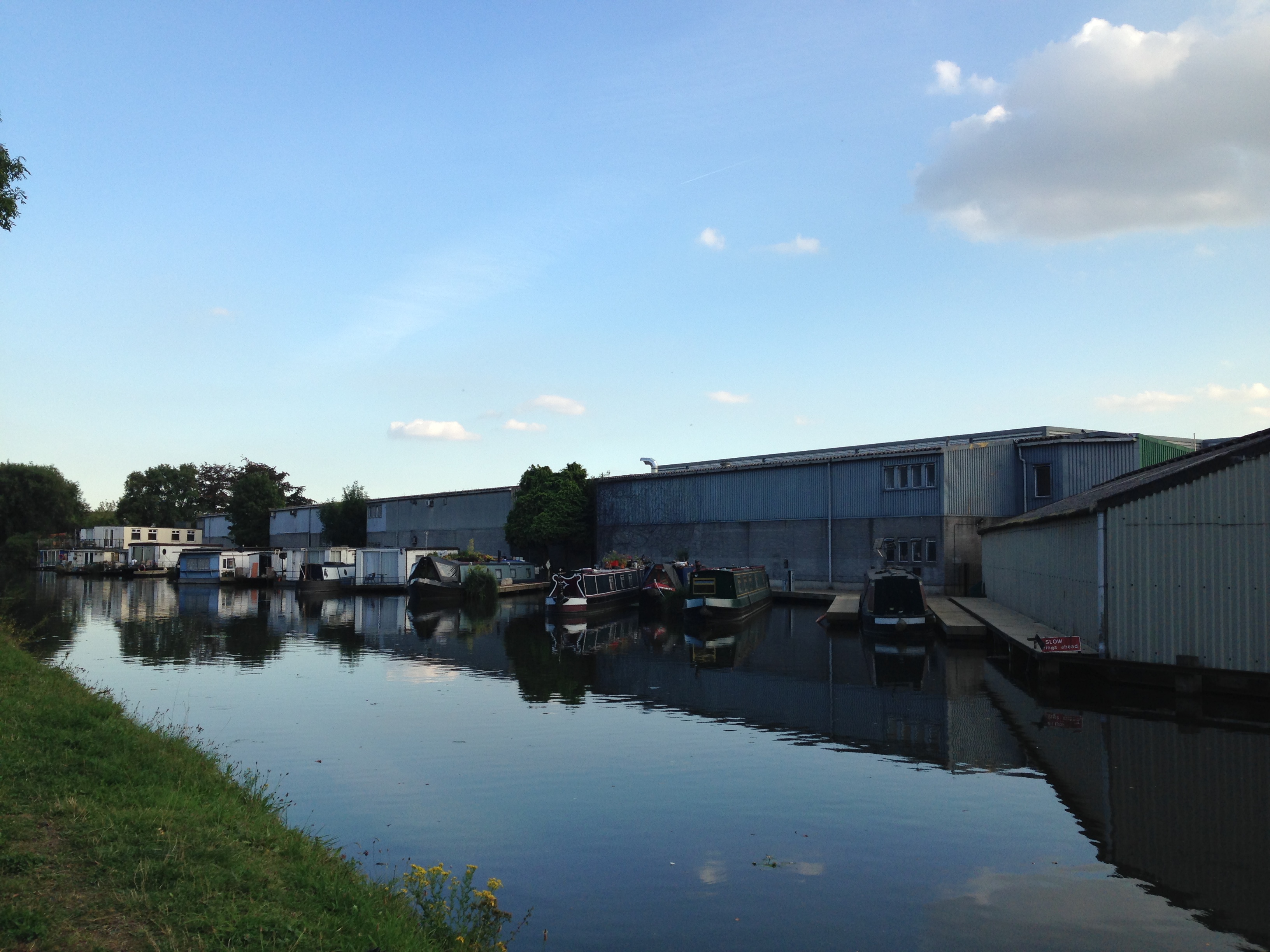
    city fringe OA

  • JSEP and Cass Cities event – London’s industrial land: cause for concern?

    JSEP and Cass Cities event – London’s industrial land: cause for concern?

    IMG_0693 Last month The Cass in Whitechapel hosted a meeting of JSEP network members which addressed the loss of industrial land in London. Professor Mark Brearley (The Cass), formerly of the GLA, kicked off the evening with a presentation setting out ‘23 thoughts about industrial land in London’. The visually engaging presentation took the form of a series of vignettes, each sketch providing an insight into often overlooked aspects of industry in London. Dr Jessica Ferm and Edward Jones (UCL) presented highlights of their working paper on London’s industrial land, arguing that loss of industrial land is running above strategic guidelines, with real estate speculation and rampant residential land values driving redevelopment of industrial premises for ’mixed use’. They showed evidence that manufacturing is changing, but not dead; industry continues to be important for London and industrial land provides low-cost business premises to a wide variety of businesses aside from manufacturing and industry. Together, these activities provide vital support to London’s economy and residents, and contribute to London’s diversity, vibrancy and status as a World City (a copy of Jess and Ed’s working paper can be accessed here). Roy Tindle reflected on the broad range of activities happening in industrial premises in south east London, pointing to examples of firms whose activities are often strategically important and of great value. He highlighted the self-defeating nature of London’s present development trajectory – how will high end flats, restaurants and bars get built and operate without aggregate yards, warehouses and breweries?

    Christian Spencer-Davies then provided a valuable insight into creative production in King’s Cross, reflecting on the progress of Camley Street Neighbourhood Forum which has brought together businesses and residents. The diversity of uses in Camley Street and their importance to London was clear from the presentation. Members then discussed the recently released London First and McKinsey ‘Economic Development Plan’ and reflected on the inspector’s report on the Further Alterations to the London Plan. Myfanwy facilitated a productive discussion, resulting in a number of important action points – convening an ‘open’ Cass seminar on industrial land, preparing briefing documents to set out major issues around industrial land in London (both for the public and technical audiences), producing media focussed short videos and securing resources for further research. All these actions are currently being pursued by network members. On Monday 2nd March 2015 Jess and Ed will be presenting their research on London’s industrial land at the LSE (4.30pm – 6.15pm at St Clements Building, Room STC.S75). All are welcome to attend. Note changed start time.

    Checked Michael Edwards 21 07 2025

  • A ‘long-term economic plan’ for London

    A ‘long-term economic plan’ for London

    Today 20 Feb 2015 the Mayor, with the Chancellor of the (UK) Exchequer, held a press conference at Tate Modern and announced this plan.  The full text is on a government web site here.

    This ‘plan’ closely resembles the London 2035 document produced last month, prepared by McKinsey and Co for London First and presented by them to the London LEP (London Enterprise Partnership) with the addition of a long list of projects.

    Neither document was based on consultation with Londoners or their organisations, but both appear to reflect the interests of big business.

    Just Space will be working over the coming months to help citizens and community organisations to develop their own ideas about what should be in a London plan which would serve Londoners. Recent work by Just Space and its member groups suggests that priorities would include:

    • Raising GDP through raising wages and productivity in what are currently low-paid jobs and sectors (which would contribute to greater equality, compared with the Mayor’s emphasis on high pay sectors).
    • Diversifying the economy of London, nurturing the public and private enterprises we DO have in all sectors, not just focusing on new inward investment in a few services.
    • Maintaining and growing services and jobs in manufacturing, making and re-making of all kinds, retrofitting and greening the city’s activities – which would mean protecting land and buildings where people work in suburban London from the threat posed by the switch of land to over-priced housing.
    • Focusing housing policy on stopping the shrinkage of the social housing stock, turning that round and growing the social-rent sector; improving conditions and lowering rents in private housing.

  • Alarm at loss of London industrial space

    Alarm at loss of London industrial space

    Feb 2015 Jenny Jones who chairs the Economy Committee of the London Assembly has issued a strong critique of the Mayor’s policies (or failure to stick to policies) on protecting industrial buildings and land from the developers who would convert almost anything to housing. In her report she draws on Just Space work, on published academic work from UCL and Cass Cities.  Her report can be downloaded at https://www.london.gov.uk/media/assembly-member-press-releases/green-party/2015/02/mayor-plans-for-london-manufacturing-to-disappear-within-fifty (dead link. Soarching reveals this page about the report https://www.london.gov.uk/who-we-are/what-london-assembly-does/news-jenny-jones/publication-jenny-jones-past-staff-protecting-workspace but the report itself has disappeared. We have written to complain.

    Meanwhile the GLA has allocated £100,000 for a study of industrial land, with this brief, (dead link) to report in May/June.  URS consultants and Peter Brett & partners (formerly Roger Tym) (and perhaps others) have been shortlisted and a decision will be made soon (note added feb 19.)

    Checked and notes added Michael Edwards 21 07 2025

  • Give your views on priorities for an Economic Development Plan for London

    Give your views on priorities for an Economic Development Plan for London

    The London Enterprise Panel (LEP) are developing an Economic Development Plan for London. This is not the Mayor of London’s statutory Economic Development Strategy, but rather a business-led plan that reflects the LEP’s priorities – its focused on maximising GVA, for instance, rather than the broader suite of economic, social and environmental indicators that the Mayor of London will have to have regard to. Its important none-the-less, because the LEP hope it will outlast Mayoral changes and steer their substantial investment and spending programmes. The LEP are seeking comments on their emerging views – be sure to respond here by 5pm Friday 19 September to ensure your views are taken into account.

    JSEP 20 June meeting

    Just Space Economy and Planning met on Friday 20 June at the London School of Economics and Political Science to take a look at the LEP’s emerging themes, with inputs from Liz Cox (new economics foundation) on Haringey Council’s 40:20 plan to marry carbon reduction with inclusive economic development and Prof Ian Gordon’s (LSE) wide-ranging analysis of the London economy. (links all dead)

    JSEP has responded to the consultation (read our response here), and hopes to meet with the LEP soon. JSEP’s response builds on our discussion on 20 June, notes of which are available here.

    Page checked Michael Edwards 19 07 2025

  • Debating London’s economy: can the global city be a city for all?

    Debating London’s economy: can the global city be a city for all?

    On Monday 14 July, 2014 a remarkably diverse group of over 50 people – citizens and politicians, trade unionists and entrepreneurs, academics and activists – gathered to explore whether and how London can reconcile its global ambitions with the needs of Londoners. Taking place at Bromley by Bow Centre, the location symbolised some of these challenges, sitting alongside both Canary Wharf and housing estates with the highest level of child poverty in the UK. On the agenda were issues presently being neglected by the Mayor of London and the London Enterprise Panel: climate change, industrial activities, gender equality, small businesses, ethnic diversity and migrant economies, affordable workspace and social enterprise.

    Speakers included:

    • Jenny Jones AM, Chair of the London Assembly Economy Committee
    • Sue Terpilowski, London Policy Chairman for the Federation of Small Businesses
    • Ben Rogers, Centre for London
    • James Meadway and Rachel Laurence, new economics foundation
    • Laurie Heselden, TUC London Region

    Organised by the Just Space Economy and Planning group, the event demonstrated the need for policy-makers to look beyond the ‘usual suspects’ – developers, financial services and big business – for the evidence, experience and ideas they will need to make London a city for all. Further events, activities and networking are planned in order to build a broader platform of engagement on strategic planning and economic development in London.

    Jenny Jones AM, Chair of the London Assembly Economy Committee said, ‘We have to do things differently, not plan for more of the same. We need prosperity broadly shared, not growth sucked up to the vampiric 1%. More of the same on our economy will lead to dangerous climate change, causing huge damage at home as well as through our supply chains. The London Plan should support and expand spaces where smaller companies and co-ops, rooted in their communities, can prosper in a way that is fair and sustainable.’

    David Fell, of London Remade, who chaired the conference, added, ‘The scope of issues raised by speakers and participants was amazing. We talked about climate change, the world’s financial system and how to ensure accountable government; but we heard stories, too, about small businesses being forced to relocate miles away from their customers, about homes being redeveloped into flats for overseas investors, and about industry being cleared away to make room for bars and restaurants.’

    Patria Roman, Latin Elephant said, ‘Migrant and ethnic economies are an important asset for London’s status as a global city and their contribution to the UK economy and to community cohesion cannot be ignored. More needs to be done to support ethnic and migrant economies so that their place in the global city is not lost as a result of regeneration.’

    Dan Hopewell, Bromley by Bow Centre said, ‘Working with local people and partners we have fostered an entrepreneurial culture within east London’s most deprived neighbourhoods, establishing over 50 local social enterprises and 275 new jobs. We are keen to contribute to shaping London’s future development, as a global city, and a city of vibrant, diverse and entrepreneurial communities.’

    Further resources:

    – Programme and presentations available: James Meadway, nef; Diane Perrons, LSE; Patria Roman, Latin Elephant; Rachel Laurence, nef (slides and project summary).

    – View photos (no longer works) and a summary of twitter activity (no longer works) from the event.

    – Full report and video footage to follow

    Notes to editors

    1. Just Space Economy and Planning (JSEP) formed in 2013 in order to build capacity within the Just Space London-wide network of community groups to participate in planning on economic issues. Further information at http://justspace.org.uk/wp-content/uploads/2013/11/131128-jsep-statement-of-intent-final.pdf and http://justspace.org.uk/about/.
    2. ‘London for all: opening up debate on London’s economy’ was held on Monday 14 July at Bromley by Bow Centre. Speakers included Jenny Jones (Chair of London Assembly Economy Committee), Sue Terpilowski (London Policy Spokesperson, Federation of Small Businesses), James Meadway and Rachel Laurence (new economics foundation), Diane Perrons (London School of Economics), Jack Hibberd (Truman’s Beer and East End Trades Guild) and Laurie Heselden (TUC London Region). The event was chaired by David Fell (London Remade).
    3. Further details at http://justspace.org.uk/2014/07/02/london-for-all-opening-up-debate-on-londons-economy/. A ‘storify’ of the Twitter activity around the event is at https://storify.com/myfanwy_t/london-for-all-opening-up-debate-on-london-s-econo. Photos at http://s1370.photobucket.com/user/JSEP/library/London for All event 14 July 2014.
    4. By engaging with a more diverse range of groups, JSEP has already uncovered evidence of the under-represented economies locating in London’s high streets, affordable office spaces and industrial areas. JSEP is concerned that the Mayor’s proposed changes to the London Plan are likely to squeeze out these activities, posing severe risks to the prospects of achieving a more inclusive and sustainable London economy (http://justspace.org.uk/wp-content/uploads/2014/04/falp-jsep-response.pdf). JSEP is also concerned that the Economic Development Plan being developed by the London Enterprise Panel does not deal with issues of sustainability and inclusion, and has largely been developed in private with no community involvement (https://www.london.gov.uk/priorities/business-economy/working-in-partnership/london-enterprise-panel/strategic-focus/economic-development-plan).
    5. For further information contact myfanwy.taylor AT gmail.com in the first instance.

    Page checked 19 07 2025 Michael Edwards

  • London for all: opening up debate on London’s economy

    London for all: opening up debate on London’s economy

    Monday 14 July 2014 1.30-6pm

    Bromley by Bow Centre, St Leonard’s Street, London E3 3BT

    http://londonforall.eventbrite.com (now dead)

    Final Programme


    Organised by the Just Space Economy and Planning group (JSEP), this event brings together speakers from the Centre for London, new economics foundation, Federation of Small Businesses and London Assembly, amongst others, to debate how a future London Plan and Economic Development Strategy could better support a more inclusive and sustainable London economy.

    With the Mayor of London currently pursuing alterations to the London Plan and the London Enterprise Panel developing an Economic Development Plan, this event will make the case for sustained dialogue with a broad range of groups.

    The diversity of London’s economy is poorly represented in plans, policies and stakeholder engagement processes, where developers and large businesses generally dominate. Less well heard are the voices of London’s small and local businesses, industrial activities, social enterprises and ethnic retailers, for example, as well as groups concerned with poverty, inequality and environmental issues.

    By engaging with a more diverse range of groups, JSEP has already uncovered evidence of the under-represented economies locating in London’s high streets, affordable office spaces and industrial areas. Yet the Mayor’s proposed changes to the London Plan are likely to squeeze out these activities, posing severe risks to the prospects of achieving a more inclusive and sustainable London economy.

    All are invited to participate in the debate, which will be initiated with contributions from speakers including:

    * Jenny Jones AM, Chair of the London Assembly Economy Committee

    * Ben Rogers, Director, Centre for London

    * Sue Terpilowski, Federation of Small Businesses

    * Rachel Laurence, new economics foundation

    * Polly Trenow, Women’s Budget Group and the Fawcett Society

    * Laurie Heselden, Southern and Eastern Region of the Trades Union Congress

    * David Fell, London Remade and Brook Lyndhurst

    * Diane Perrons, London School of Economics and Political Science

    Programme:

    1.30-2pm: Registration; tea and coffee.

    2pm: Opening remarks from Just Space Economy and Planning and Bromley by Bow Centre.

    2.15pm: Opening debate, including contributions from Jenny Jones AM (Chair of the London Assembly Economy Committee) and Ben Rogers (Centre for London).

    2.45-4.15pm: Themed debates.

    4.15-5pm: Concluding discussion.

    5-6pm: Drinks reception.

    How to find the Bromley by Bow Centre (www.bbbc.org.uk)

    Bromley by Bow Centre is around 30 minutes from central London, being just five minutes from Bromley by Bow Underground station on the District and Hammersmith & City lines.

    Address and reception: Bromley by Bow Centre is at the corner of St Leonard’s Street and Bruce Road (London E3 3HN), the Centre’s reception is in the Connection Zone which is on the Bruce Road side of the building.

    By Underground: Bromley by Bow station (District Line, Hammersmith and City Line).

    By Docklands Light Railway: Bow Church or Devon’s Road stations.

    By bus: From the West End and City – 8 or 25; From Stratford or Lewisham – 108; From Hackney – 488.

    Page checked 19 07 25 Michael Edwards

  • Next steps for Just Space Economy and Planning

    Next steps for Just Space Economy and Planning

    After the enormous collective effort of our 40 page response to the Mayor’s proposed Further Alterations to the London Plan (FALP), Just Space Economy and Planning group is, well, regrouping, with two evening seminars and a half-day event planned over the next few months.

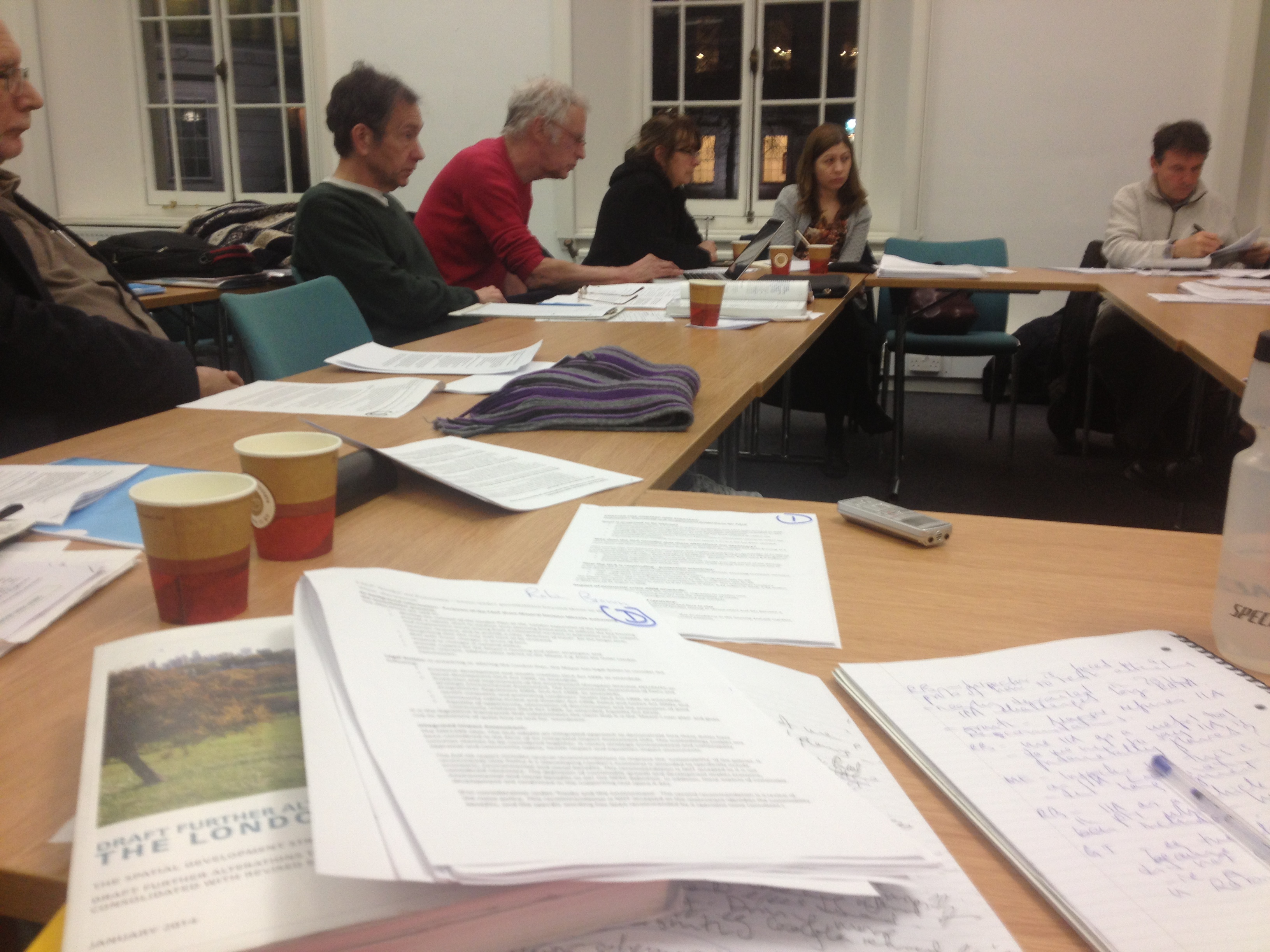
    JSEP ponders the FALP, gathering evidence and examples with which to respond to the proposed alterations to the London Plan
    JSEP ponders the FALP, gathering evidence and examples with which to respond to the proposed alterations to the London Plan

    Fear not! We’ll  be getting back to the FALP soon enough, in order to marshal a diverse range of representations on economic issues for the Examination in Public in September. To get involved, contact Myfanwy Taylor (myfanwy.taylor.09 AT ucl.ac.uk). To catch up on JSEP’s work on the FALP, you can read our collective response here (2nd response), and the note of the discussion which informed it here.

    But before then…

    On Friday 20 June, we’ll be trying to look beyond the minutae of the FALP to develop our thinking on more environmentally sustainable and socially inclusive economic development strategies for London.  The London Enterprise Panel (LEP) is currently working on a new Economic Development Plan for London (and have commissioned London First for the task) but its hard to get involved as the meetings are held in private and there’s no community representation. Nearly six months on, JSEP’s request to meet with the LEP still remains unanswered.

    We’re also working to organise a long overdue discussion with trades unions, cooperatives and other groups that represent people who work in London, whose voices tend not to be heard in debates about economic issues in planning.

    Finally, watch this space for further details about a half-day event to explore how a future London Plan might support a more socially and environmentally sustainable economy We’ll be addressing the questions Boris ducked in the FALP, reinvigorating public debate about how planning policy can support the kind of London economy we want.

    Checked by Michael Edwards 17 07 2025

  • 4 Economy

    4 Economy

    This page relates to chapter 4 – London’s economy in FALP  [There are separate pages about the work of the Just Space Economy and Planning Group here.]

    To download the Further Alterations to the London Plan as a whole, or download supporting evidence and related documents, go to our Greater London page. Or you can download this chapter on its own here.

    Short summary of changes: FALP Ch 4 summary 1p
    L
    onger summary of changes: FALP Ch 4 Summary 7pp

    Conference workshop key points:

    • Make the link between sustainable development and economic development (e.g. travel to work); industrial development and loss of land.
    • Challenge idea that town centres are in decline and emphasise the importance of identity, services for/by minorities, infrastructure. (very local and Major Shopping Centres are supported in the London Plan).
    • Undervaluing of existing economic uses which are further under threat via FLEXIBILITY IN PLANNING PROCESSES.

    Notes of the workshop discussion 140315 JS economy workshop

    Draft text for a submission to the GLA is in preparation by many contributors. If you want access to the server where these documents reside contact m.edwards [at] ucl.ac.uk until Myfanwy Taylor returns from leave on April 5th, after which you can contact her.

  • Affordable Workspace in London: Just Space at Bootstrap Co.

    Affordable Workspace in London: Just Space at Bootstrap Co.

    Just Space Economy and Planning meeting on Affordable Workspace at Bootstrap Co.

    On Monday 27 January 2014, Just Space Economy and Planning held their fourth bi-monthly seminar on the important issue of affordable workspace in London. Hosted by Bootstrap Company, we heard from their Chief Executive, Sara Turnbull, and Dr Jessica Ferm from the Bartlett School of Planning at UCL.

    Bootstrap’s model of providing affordable workspace to social enterprises and start-ups and generating income to fund projects aimed at alleviating poverty through access to employment and entrepreneurs was of significant interest to Just Space, including for  groups looking to develop alternative plans for former industrial buildings and to protect existing affordable workspace. The lack of affordable workspace more broadly in London was affecting Bootstrap, however, as tenants found it hard to move on as they grew. The story of Bootstrap also highlighted the barriers businesses and social enterprises face in participating in planning policy development processes, due to the time involved in reading technical documents and attending meetings.

    Jessica Ferm discussed how planners’ tools for protecting affordable workspace were being eroded or removed. Her research suggested new policies to deliver affordable workspace through Section 106 agreements on new developments were not sufficient to offset the loss of existing affordable workspace occurring. Discussions with the People’s Empowerment Alliance for Custom House (PEACH), Peckham Vision and Camley Street Neighbourhood Forum (dead link) also highlighted that existing businesses – including small independent high street retailers, craftspeople, artists and manufacturers occupying hidden workspaces behind high streets, and distribution, storage and processing activities occurring in industrial estates in central London – were at risk from new housing-led developments and planning policies that didn’t recognise their contribution to the London economy.  Just Space and London Tenants Federation encouraged community and business groups to come together in community planning networks in order to build relationships and improve participation in planning.

    The Mayor’s consultation on the Further Alterations to the London Plan (dead link) also came up. Just Space was encouraged by changes to affordable workspace and high street policies, but concerned about the overall threat to employment land by the increasing focus on housing delivery, in particular in town centres and industrial land with good transport connections. Further materials and events will be organised to help community and business groups respond to the consultation; see Just Space material so far here.

    A full note of the meeting is available here. You can also download Jessica Ferm’s presentationbackground note and research proposal.

    Checked 16 07 2025 by Michael Edwards. Broken links marked or fixed.